
Unveiling the Power of the Lean Canvas
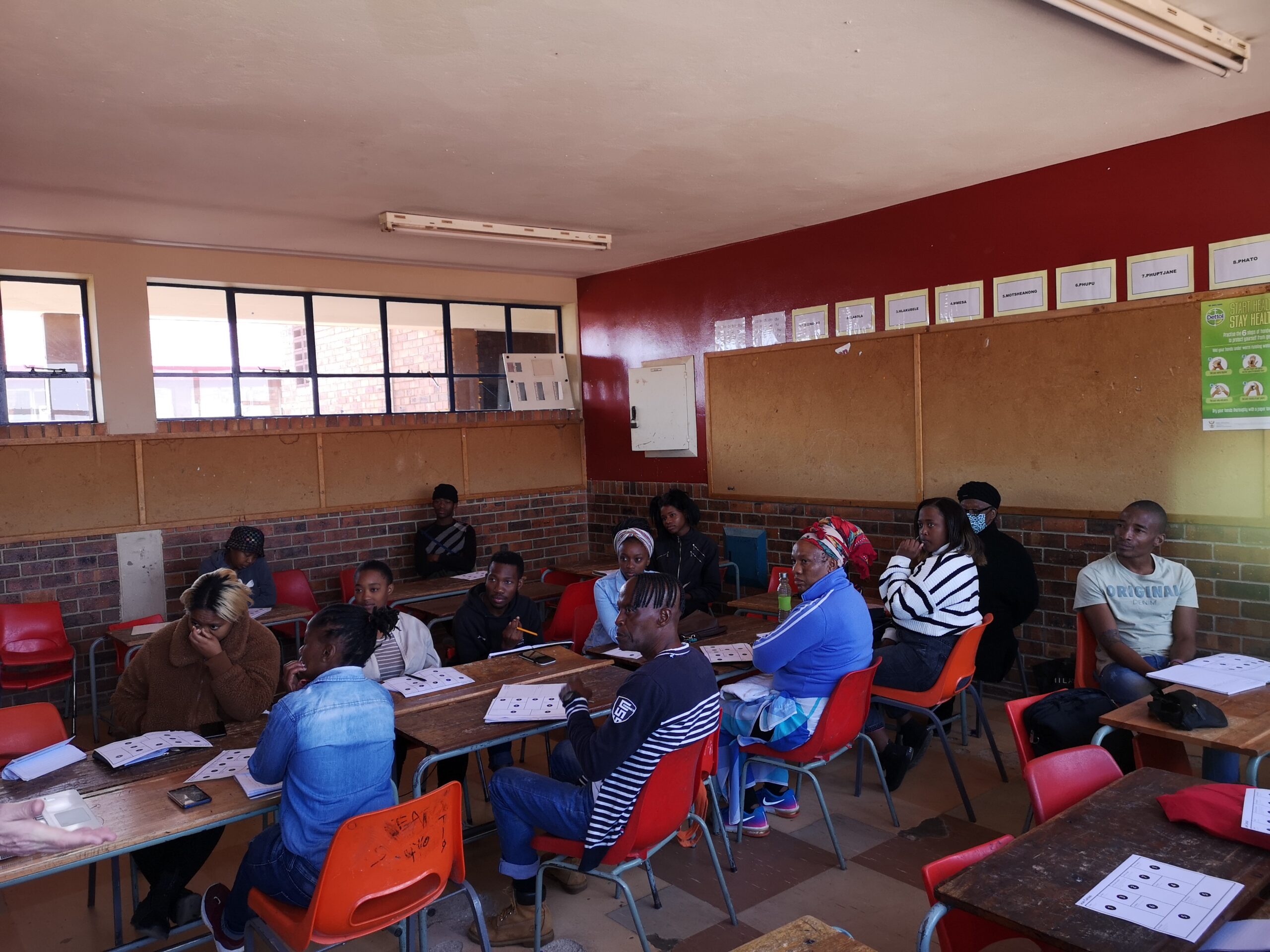
One of the key tenets of KiPiDi is to take entrepreneurship education to where it is needed most, Kasi. This means staging the workshops in Kasi, in the community where our nascent entrepreneurs live. We therefore use the infrastructure that is available within the community to run the workshops, community centres, church halls and the like. That this infrastructure is in need of repair goes without saying, and begs the question as to why? A matter for another day.
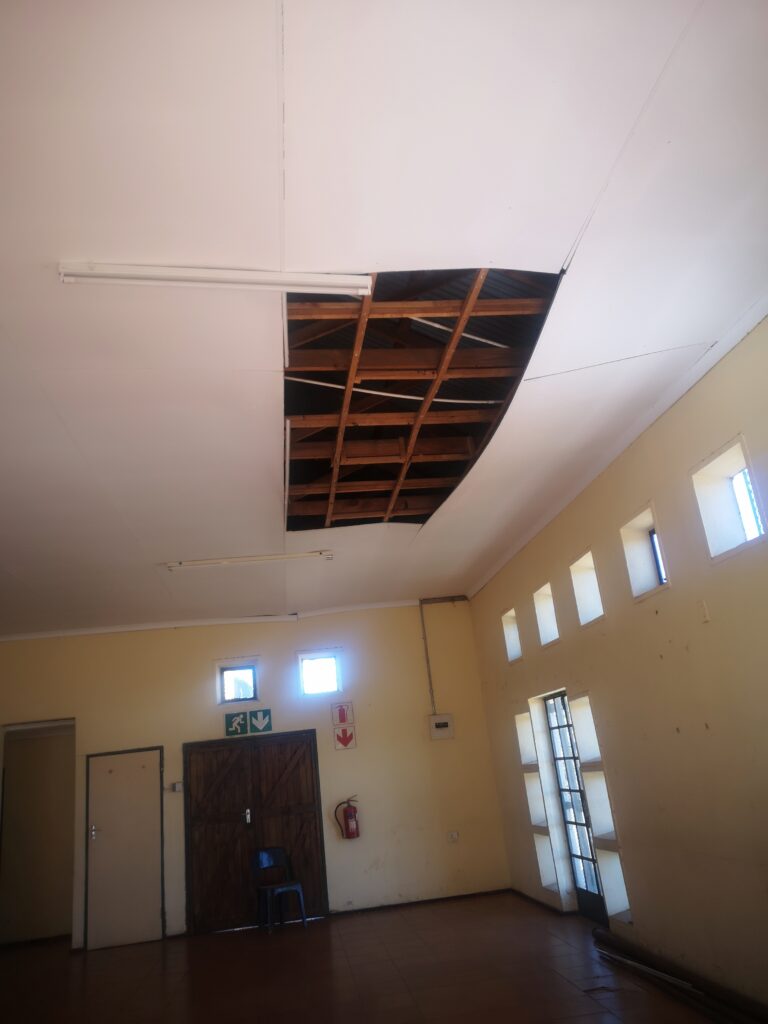
In Naledi we held Day 1 and Day 2 in the Naledi Sports Complex, a venue clearly in need of maintenance and repair. So much so that after a recent thunderstorm the ceiling finally gave way in the hall we were using (see the picture).
For what would appear to be for safety reasons KiPiDi had to relocate to a classroom in the Rebone Primary School.
Call it a classroom if you will.
Holes in the floor, desk and chairs that had seen better days, and an open distribution board (but no power in the classroom, and no, we were not load shedding) with bare wiring the likes of which would confuse an experienced electrician. Little fingers like to play with things.
This is the environment we send our children to school in.
Do we have any shame?
A solution.
If there is a shortage of funds may I propose that we trade some of the fancy German cars our blue light boys love to be ferried around in for more modest vehicles such as those manufactured by our BRICS partners in India and China. A diplomatic coup if there ever is! The money saved can go towards fixing community infrastructure that is supposed to serve the community. With dignity and pride.
Is that too much to ask?
We will now hold the balance of the workshops for Naledi in our family home, my Mother’s garage in Naledi.
But I digress. Let me focus on what matters. Empowering Kasi.
Day 3 built upon the Validation Board concept introduced on Day 2. The focus was on the Lean Canvas, an indispensable tool for entrepreneurs to model their business ideas during the start-up phase.
The Lean Canvas, developed by Ash Maurya, is a one-page business plan template that helps entrepreneurs deconstruct their ideas into the key assumptions and components that make up a successful business. It is not only beneficial for start-ups but also serves as an insightful lens for analysing existing businesses. By guiding entrepreneurs through a structured approach, the Lean Canvas enables them to focus on the most crucial questions and aspects of their business during the start-up phase.
As the day progressed, workshop participants had the opportunity to dive deep into the practical application of the Lean Canvas. They collaboratively workshopped a real-life business idea – a floor and blind installation business – brought forward by one of their classmates. This interactive exercise allowed the participants to gain hands-on experience in using the Lean Canvas, while also providing valuable feedback and insights to the business owner.
The Lean Canvas is divided into nine key blocks, each representing a fundamental aspect of the business. These blocks include:
- Problem: Identifying the top 1-3 problems the business aims to solve.
- Customer Segments: Defining the target customers for the business.
- Unique Value Proposition: Crafting a compelling and clear message that states why the business is different and worth a customer’s attention.
- Solutions: Outlining the top features and solutions the business offers to address the identified problems.
- Channels: Determining the most effective ways to reach target customers.
- Revenue Streams: Identifying how the business will generate income.
- Cost Structure: Listing the main costs the business will incur.
- Key Metrics: Identifying the most important indicators of the business’s success.
- Unfair Advantage: Defining the unique edge that sets the business apart from competitors.
By dissecting the floor and blind installation business into these components, participants were able to help the business owner identify potential gaps in their original analysis. This also served as a learning opportunity for everyone, as they got to see how the Lean Canvas can be effectively applied to an actual business and not just an idea.
Day 3 of the KiPiDi SYOB workshop proved to be another productive and enlightening day for all participants. As they wrapped up the day, the group was assigned homework that required them to model their own businesses and ideas using the Lean Canvas. This hands-on practice is bound to further solidify their understanding of this powerful tool and help them gain clarity on their own business ideas.
Stay tuned for more updates from the KiPiDi SYOB workshop, as we continue to bring you the latest insights and learning experiences from this empowering event.


